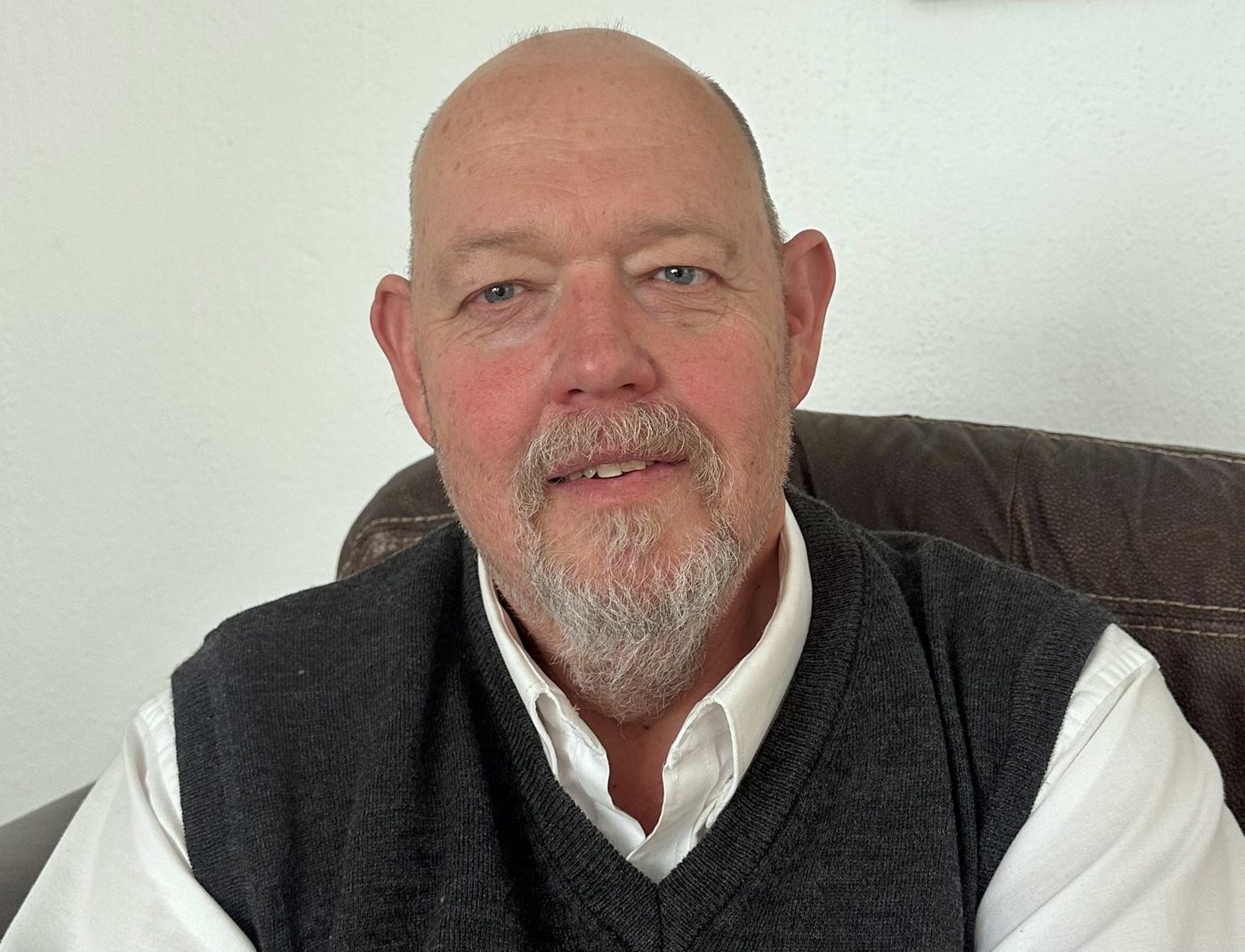
Cobus van Zyl · Pegada Holdings · Johannesburg
Send me the work that needs someone at your level.
I have been an executive with different roles for large and medium organisations for the last 25 years. I cannot think of a single day where there was not something important in the back of my mind, something that will make the future a better, easier or more successful place, that needed my attention but that was trumped by something more urgent and (more often than not) less important. At that stage no-one needs a consultant to tell you what is needed, you need someone to take the actual load and make it happen.
Whatever it is. A decision that needs structuring, a process that has gone stale over the years, a function that needs building, a negotiation, a system nobody owns, the analysis the board is waiting on. If it needs an experienced executive and there isn’t one free, that’s the work I take.
Send it to me — cvz@pegada.co.za
I take on a small number of engagements at a time.
02 · What I actually do
You hand it over. I work out what it is, and then do it.
You hand it over in whatever state it’s in — a frustration or an idea, half a page, half a conversation. I go and find out what is actually going on, decide what the work is, and then do it.
01
Work out what this actually is.
The research nobody has time for. Talk to the people involved, look at how it currently works, separate what is known from what is assumed, and come back with the real shape of the problem — which is often not the shape it had from the outside.
02
Do the work.
Design the process, build the model, write the pack, structure the scheme, map the requirement, rebuild the thing that was stale. Whatever the answer turned out to need.
03
Stay until it holds.
Hand it to the people who will run it, set the cadence that keeps it alive, and stay close enough to fix what the first weeks expose.
Once I have accepted a piece of work, it is mine. The duty to keep you updated moves to me. You should not have to chase me for it.
03 · The problem I help with
The work that waits longest tends to have a pattern.
It sits across functions, so no single person owns it. It needs someone senior, so it can’t be pushed down. It isn’t urgent in any given week, so it never wins the day. And every time someone picks it up, they find it’s bigger than it looked — so they put it back down, honestly meaning to come back when there’s room.
There’s never room.
Meanwhile the cost is real but quiet: the workaround everyone has learned to live with, the decision deferred another quarter, the reporting nobody fully trusts, the process that used to work. None of it breaks loudly enough to force the issue.
04 · Why I can help
Twenty-five years of senior finance and executive work, most of it in conditions that were not ideal.
Eight years with a Fortune 500 oil services company across Angola, Libya and Egypt — financial planning and analysis in Angola, including an ERP reconfigured to satisfy the local tax regime and US GAAP head-office reporting simultaneously; then in Libya, district finance manager and afterwards country manager with full P&L responsibility. In Mozambique, brought in to resolve financial-systems problems and found a major tax exposure, resolving it before it landed. Then eighteen months as acting CEO of an engineering and construction group, and nine years as its CFO — finance, treasury, risk, compliance, contract risk.
Chartered Management Accountant (CIMA/CGMA), MBA. Based in Johannesburg.
I also founded and co-run Everbrite SA, a coatings distribution business operating across Southern Africa and into East Africa. I’m an operator as well as an adviser — which matters when the work is execution rather than opinion.
Over the last year I’ve designed and built AI operating systems inside clients’ businesses, making information visible when needed, not just available.
That matters here for one reason. It’s the same instinct I bring to your problem: work out what is actually going on, decide what the work is, build the thing that holds, and make sure it keeps working when nobody is watching it.
What I won’t claim: I don’t know your business better than you do. I bring you the extra capacity, the experience and the effort to work the problem properly.
| Senior experience | 25 years |
| Qualification | CIMA / CGMA |
| Postgraduate | MBA |
| Based | Johannesburg |
05 · The range
Two with a title, One without.
01
As a fractional CFO
Not the financial manager or controller’s job – true CFO critical thinking and strategic impact.
This is the room where the bank says no. Deciding what the business is worth and doing the work needed before someone can look to buy into it. Planning for the growth, preparing for the constraint – putting systems in place that shine light on the way forward – not fancy dashboards and graphs, information that is needed to move the needle.
Nine years as a group CFO with a board seat — treasury, risk, compliance, contract risk. Two companies bought and one sold, equity placed with venture investors, a company unbundled and its B-BBEE status lifted from level 8 to level 1. Board decision packs behind major infrastructure commitments, capex versus service-model reviews, funding and investor readiness.
02
As a fractional Chief AI Officer
I understand what AI is and what it is not – how it excels in the middle where the work, routine and toil sits, how it is limited in the beginning where decisions are made about the outcome and structure, how it is downright dangerous at the end if used unchecked. I build the systems and then run on them. Information has been available for years, but often hidden and stowed away – with AI, we can make it visible at the moment of need. That is powerful.
I have built a group knowledge base actually populated: structure, culture, people, clients, projects, pipeline – information immediately available in a chat – context sorted, skills and artifacts shared across the organisation. An executive outcome and delegation platform, designed, built, tested — rebuilt when the first model highlighted weaknesses in our approach to delegation – weaknesses that were hidden for years in the old way of doing things. Structured AI onboarding run across an executive team.
03
And the work with no title
Twenty-five years of doing business in Africa. I have seen a lot. I have sorted out a good deal of it. How do you train for the call that comes while you are at your son’s school concert — government bulldozers in front of the office in Libya, wanting to put a new road through your workshop? If I cannot help, I will say so.
06 · How I work
Direct, and without much ceremony.
I’d rather understand the thing properly than produce something that looks thorough. That means slowing the problem down at the start — talking to the people who live with it, looking at how it actually runs rather than how it’s described, and holding finance, operations, people and cash together instead of treating them as separate questions. Most of these are connected problems wearing a single label.
Then:
- I’ll tell you what I find, including when it’s inconvenient, or when the problem turns out to be somewhere else entirely
- I’ll separate assumption from fact, and say which assumptions actually matter
- I won’t produce a long document nobody has time to read
- I’ll push for clear ownership, because work without an owner comes back
- I’ll be straight about what I don’t know and what sits outside what I can do
I’m not there to run a process around you, or to hand back something that needs a second project to implement.
07 · How it works
Send it in whatever form it exists.
01
You send it.
In whatever form it exists. An email describing the frustration is enough. You don’t need to define the scope — if you could define it precisely, it probably wouldn’t still be sitting there.
02
We talk once.
Half an hour. No charge, no pitch. Enough for me to understand the situation, and for both of us to judge whether I’m the right person for it.
03
I come back with the shape.
What I think the work actually is, what it will take, what it will cost, and what you’ll have at the end. If the answer is “you don’t need me for this,” I’ll say so.
04
Then I do it.
And you hear from me without having to ask.
Fees are set against the agreed scope. On larger engagements we re-scope as the work develops rather than pretending the shape was knowable on day one. Payment is per milestone.
08 · Whether this fits
Whether this fits.
It probably fits if
- It needs an executive’s judgement and there isn’t one free
- Something important has been on the list for months and keeps moving
- The issue crosses departments and no one person owns it
- It needs doing properly, not delegating down to whoever has capacity
- You’d rather hand it over than manage someone through it
- The business is established — roughly R10m to R500m turnover, though the situation matters more than the number
- You have the authority to act on what comes back
It probably doesn’t fit if
- What’s needed is bookkeeping, monthly accounts or routine compliance work
- You want a second opinion on a decision already taken
- You want advice to circulate rather than work to be done
- The mandate to change anything doesn’t exist yet
- You need someone full-time
09 · Send it to me
A short email describing the thing that keeps not getting done.
Not a brief, not a scope — just the problem as you’d explain it to a colleague.
10 · Case studies
Some of the work.
Funding readiness, founder-led growth business
A founder was preparing to approach lenders and investors. I tested the funding need against the actual cash requirement, worked through the use of funds, the commercial logic and the assumptions underneath it, and put together the questions a funder would ask before they asked them. What came back was a list of what had to be fixed before the first meeting — not a polished deck for a raise that wasn’t ready.
Capex or service model, industrial water infrastructure
The business needed water treatment capacity and had assumed it was a capex decision. I built the comparison against a service and tariff model: capital allocation, who carries which risk, funding flexibility, unit economics across the life of the asset, and what each option does to the balance sheet. The answer changed the shape of the commitment, not just its price.
Board decision pack, major water infrastructure investment
A board had technical, commercial, funding and operating inputs arriving separately, and no way to weigh them against each other. I built the decision pack: the options as they actually stood, the assumptions each one depended on, the risks worth naming, and the recommendation logic. They could interrogate it rather than take it on trust. The capital decision was made on the numbers.
Commercial and governance risk review, infrastructure opportunity
A large opportunity carried tender and stakeholder risk that nobody had set out in one place. I separated what was actually known from what was being assumed — the two had been running together — mapped the governance and tender exposure, and laid out the options still open. Leadership went in knowing what they were carrying. Some of it they chose not to carry.
Investor readiness, modular infrastructure product
A strong technical product with no commercial story a funder could follow. I rebuilt it as one: the problem it solves, who has that problem and what they do instead today, the business model, use of funds, milestones, and the risks an investor would find anyway. The engineers had described what it does. Investors needed to know why it earns.
The executive AI system I run my own work on
I built an AI system that briefs me the way a chief of staff briefs a principal — the two or three things that need me today, not the full list. Behind it: capture by voice, delegation where ownership genuinely transfers rather than sitting assigned and forgotten, and the discipline held in the system instead of in my willpower. I published the method in full.